Your Volunteers Are Your Best Asset. Don't Frustrate Them.
Small museums, archives, and historical societies run almost entirely on the passion and dedication of their volunteers. From retired teachers to local history enthusiasts, these individuals keep the doors open and the artifacts preserved.
But when it comes to cataloging and inventory, many museums force their volunteers to use complex, outdated software that feels like learning a second language. When software is hard to use, data entry slows down, mistakes happen, and volunteers get frustrated.
The Hidden Cost of Volunteer Turnover
When a volunteer leaves because they find the software too intimidating, the museum loses more than just free labor. You lose the local knowledge they carried, the history of the objects they worked with, and the time you spent training them.
A clunky database literally costs you institutional memory. The most important feature of any museum software isn't its ability to generate complex reports—it's whether an 80-year-old volunteer can sit down and add a photo without calling for help.
1. No More Forgotten Passwords
Managing passwords for 15 different part-time volunteers is a nightmare for any museum director. People forget passwords, write them on sticky notes attached to monitors, or share accounts, destroying the integrity of your audit logs.
Museum Vault solves this with Passwordless Authentication. When a volunteer needs to log in, they simply enter their email address. We send them a secure "magic link." They click it, and they are securely logged in. It completely removes the biggest barrier to getting started.
2. Designing for Accessibility: Clean and Uncluttered
We ditched the complex, intimidating spreadsheets of desktop-era software. Museum Vault uses a clean, card-based horizontal grid system that mimics the physical index cards volunteers might have used decades ago.
We specifically use high-contrast text, clear and obvious buttons, and large touch targets. We don't hide important actions behind tiny icons. Everything is designed to be highly accessible for users of all ages and technical backgrounds.
3. Using Everyday Technology: Smartphone Auditing
Doing an inventory check used to mean wheeling a laptop on a wobbly cart through the storage room and using a clunky, expensive barcode scanner attached by a cord.
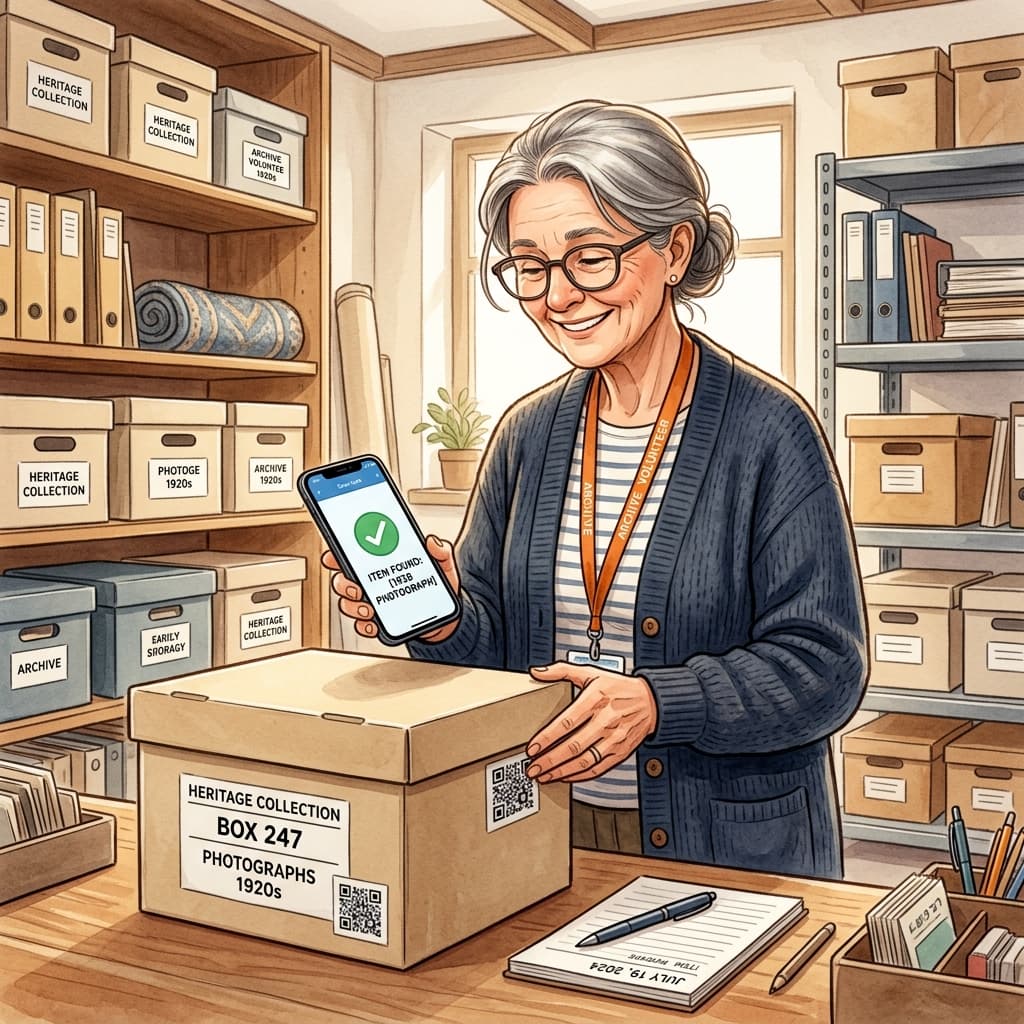
With Museum Vault, volunteers can simply use their own smartphone cameras to scan QR labels on boxes or artifacts. The system instantly brings up the record on their phone, allowing them to update the location or condition on the fly. This turns a dreaded chore into a fast, modern workflow.
4. A Safe Environment for Mistakes
Volunteers are often afraid of "breaking" the database, which causes them to hesitate. Museum Vault embraces draft records.
A volunteer can start a record, upload a photo, and mark it as a draft if they aren't sure about the exact accession number or formatting. This allows them to contribute without fear, and a curator can simply review the draft queue later to finalize the records.
5. Generous User Limits
Other software penalizes you for having a large volunteer base by charging per-user licenses. If you have 20 volunteers who each work 4 hours a month, it makes no sense to buy 20 expensive software seats.
Our $39/month Pro tier allows up to 25 members, and our Enterprise tier offers unlimited seats. You never have to share accounts or lock people out just to save money on licensing fees.
Conclusion: Empower Your Team
When you remove the friction of bad software, you empower your volunteers to do what they do best: care for the collection and uncover the stories hidden within it.
Give your team the tools they deserve, and watch your backlog of uncataloged items disappear.