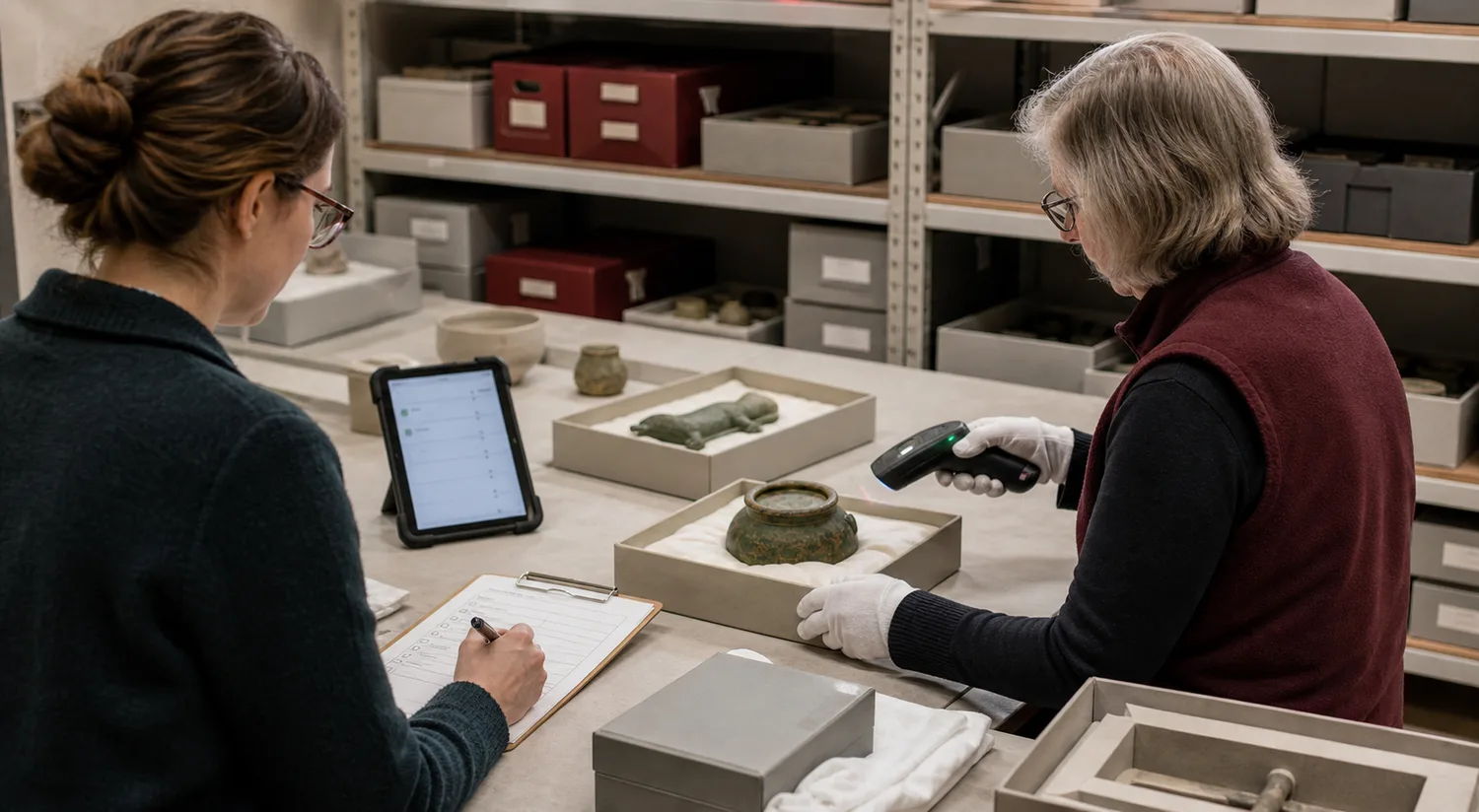
An audit should calm the room
A good inventory audit does not begin with scanning. It begins with a room that knows what it is trying to prove. Which objects should be here? Which records are in scope? Who is allowed to update a location? What happens when something is missing?
Without those answers, volunteers end up doing detective work under pressure. With them, the audit becomes a steady confirmation process: found, not found, found somewhere else, needs curator review.
The goal is not to finish the whole museum in one heroic push. The goal is to produce trustworthy results that the collections lead can act on.
Start with a scope small enough to close
Choose a shelf, case, box range, storage room, or named collection that can be completed in a reasonable session. A narrow scope gives volunteers a visible finish line and gives curators a clean exception list.
If the museum has not audited recently, begin with an area that is important but not chaotic. Early success builds the team's rhythm before they tackle the hard storage spaces.
- Define the exact physical area before the session starts.
- Print or open the expected object list for that area.
- Assign one person to scan or search and another to physically handle objects.
- Decide who can make live location changes and who can only leave notes.
Prepare identifiers before volunteers arrive
The identifier is the spine of the audit. It may be an accession number, object ID, barcode value, or QR label, but it needs to point to one catalog record clearly enough that a volunteer can use it without guessing.
Before audit day, spot-check a sample of labels. Look for handwritten numbers that can be confused, old labels that no longer match the catalog, objects with no visible identifier, and duplicate IDs that will slow the session down.
Museum Vault supports search and scan workflows, but even the best software cannot rescue a label that nobody can read. Fixing a few identifiers in advance can save hours later.
Use three simple outcomes
Do not ask volunteers to make curatorial decisions during scanning. Give them a small set of outcomes and reserve judgment calls for review.
In most audits, three statuses are enough: verified, missing, and moved. Notes can capture uncertainty, damage, unclear labels, or cases where the object exists but the record needs a curator.
- Verified means the object was found where the audit expected it.
- Missing means the object was expected in scope but was not found during the session.
- Moved means the object was found, but the recorded location may need to change.
Make exceptions visible, not embarrassing
Every museum has surprises: objects in the wrong box, records with old shelf names, labels that fell off, and donations that were partially cataloged years ago. The audit process should surface those issues without turning them into blame.
Clear exception reports help. Curators need to see which objects are missing, which were moved, which records need better identifiers, and which notes require follow-up. A tidy exception list is more valuable than a spreadsheet full of ambiguous comments.
Close with decisions
The audit is not finished when the last barcode is scanned. It is finished when someone reviews the exceptions, updates approved locations, starts follow-up searches, and records what was verified and when.
Museum Vault keeps audit activity tied to artifact records so the museum can see the history of verification instead of treating each audit as a disconnected event.
That history matters. It gives future staff a trail of care: who looked, where they looked, what changed, and which questions still need attention.
A practical audit rhythm
For volunteer teams, the best rhythm is repeatable: choose one area, prepare the expected list, scan or search object by object, flag exceptions, review the results, and only then update permanent location data.
Small finished audits beat large abandoned ones. Over time, those finished sessions build a more reliable catalog and a more confident team.